


The original Nintendo Entertainment System (NES) holds a special place in gaming history, offering nostalgic charm and simple gameplay mechanics. However, many of its games mask their ruthless difficulty behind cheerful 8-bit graphics and straightforward controls. Beneath the nostalgic appeal lies a harsh reality filled with pixel-perfect jumps, unpredictable enemy patterns, and punishing mechanics that challenge even the most skilled players. The NES games era, often described as “Nintendo Hard,” became infamous for its brutal difficulty, which forced players to sharpen their reflexes and strategize to overcome relentless obstacles.
This notorious difficulty wasn’t accidental. Limited memory in game cartridges meant developers had to find ways to make games last longer. As a result, challenging gameplay, combined with a lack of save systems and unforgiving Game Over screens, pushed players to their limits. These games required trial-and-error mastery, reliance on obscure hints, and sheer determination. Players were often left experimenting with hidden mechanics or grinding through levels in search of elusive power-ups, creating a rewarding—yet maddening—experience for those willing to endure the challenges.
1. The Silver Surfer
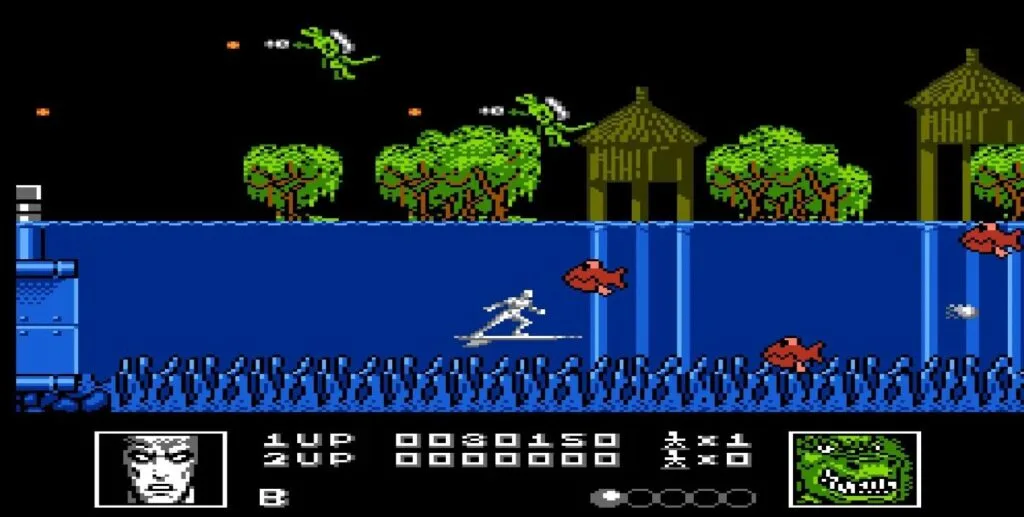
The NES excels in the realm of side-scrolling shooter games, as seen with classics like Gradius and Life Force. Silver Surfer builds upon that formula, but with a steep increase in challenge. It plunges players into a chaotic world of constant “bullet hell” sequences and tight mazes. However, one of the game’s major hurdles is its visual design—distinguishing between environmental elements and the background is unnecessarily tricky, as enemy projectiles often blend in until it’s too late to react.
Adding to the challenge, the titular Silver Surfer has no room for error. A single hit, whether from an enemy projectile, grazing the environment, or even the lightest contact with a random object, results in immediate death. The inability to sustain damage drastically raises the stakes. On top of this, the game’s controls require players to repeatedly tap the fire button for attacks, making it a grueling experience without the aid of a turbo controller. These punishing mechanics elevate Silver Surfer to one of the most demanding NES games ever
2. The Battletoads

Battletoads is notorious among NES games for its challenging and sometimes frustrating co-op mechanics. In co-op mode, both players share the same pool of lives, meaning if one player loses all their lives, the game ends for both—something not uncommon in difficult NES games. This setup makes teamwork essential but can also lead to unintended conflicts due to friendly fire, a hallmark frustration in many NES games. The Clinger Winger stage is a prime example of its difficulty, where a bug in the co-op mode causes the second player’s controls to stop responding, a flaw that cemented Battletoads’ place among the hardest NES games ever made.
Developed as a competitor to the wildly popular Teenage Mutant Ninja Turtles, Battletoads was marketed primarily to younger audiences. However, its extreme difficulty feels at odds with this demographic. One of the most infamous levels, the Turbo Tunnel, is often considered impossible by casual players. Ironically, within the context of the game’s overall punishing difficulty, the Turbo Tunnel is regarded as one of the easier stages by seasoned players.
3. Fester Shoots

The challenging reputation of Fester’s Quest lies primarily in its poor design choices, especially the frustrating controls. Fester’s movement is painfully slow, making it tough to maneuver in a fast-paced shooter environment. The weapon mechanics exacerbate the problem: Fester’s gun shoots in odd, spiraling patterns, which often miss enemies in narrow corridors. This is further complicated by the bullets not passing through environmental obstacles, causing unnecessary difficulty in hitting enemies in confined areas.
Adding to the frustration, Fester’s Quest has no save or password system. Players are forced to start the game from the beginning if they lose, even though their collected items are retained after using a continue. Compounding the difficulty, Fester has only one life and can only withstand two hits before dying. These elements make the game punishing and require players to repeatedly replay sections, which can lead to immense frustration.
This combination of rigid controls, awkward mechanics, and an unforgiving progression system makes Fester’s Quest a notoriously difficult NES title remembered more for its flaws than its fun factor.
4. Mega Man

Mega Man launched an iconic franchise, and every entry in the series is renowned for its challenging gameplay. The original Mega Man, however, stood out for its difficulty stemming from its design limitations. It lacked features like energy tanks and a password system, making it necessary for players to finish the game in a single session. Additionally, the controls were less polished compared to its sequels, adding another layer of frustration.
One of the most infamous moments in the game occurs in the first Wily stage, where players need the Magnet Beam to progress. This item is hidden in Elec Man’s stage and requires the Super Arm (Guts Man’s weapon) to access. If players skip Guts Man’s stage or fail to realize this connection, they may find themselves stuck later with no way forward. This kind of roadblock, considered unfair by many, was unique to the first Mega Man. Despite its flaws, the game still introduced powerful weapons like the Thunder Beam, setting a foundation for what the series would become.
5. Castlevania III
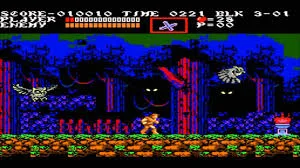
Castlevania III: Dracula’s Curse stands out in the series for several reasons — not only does it introduce multiple playable characters and branching paths, but it also refines the gameplay elements that were lacking in Castlevania II: Simon’s Quest. However, it is perhaps most famous for its incredibly high difficulty. While the first Castlevania offered some introductory stages to help players get accustomed to the controls, Dracula’s Curse offers no such guidance. The game is tough from the very first stage and never lets up.
One of the most frustrating aspects of Dracula’s Curse is the stairs, which become the player’s greatest challenge. Unlike other platformers, the hero cannot simply jump on the stairs. Players must start either from the top or the bottom and move slowly up or down. On stairs, you can’t speed up, slow down, or use sub-weapons, which can make navigating tricky. The game introduces Grant, a character with the ability to crawl on ceilings, as a potential solution for avoiding the peril of stairs altogether, and this becomes a strategic element in the game’s design.
6. The Immortal

Unlike many other tough NES games, The Immortal is an isometric adventure that introduces a unique challenge. The protagonist, a wizard, navigates through a vast dungeon filled with deadly traps that can spring up at any moment. With its steep learning curve and puzzles that often seem obscure, it’s nearly impossible to progress without trial and error or a guide. Even something as simple as approaching a ladder from the wrong angle can cause the wizard to fall to his demise. To put it simply, the title The Immortal doesn’t refer to the wizard.
While magic plays a smaller role than players might expect, there are situational spells available, like charming Will-o’-the-Wisps. Combat also deviates from the norm, as it doesn’t rely on magic. Instead, when encountering an enemy, the game switches to a combat mode where players can dodge, slash, or stab in specific directions, testing reflexes in a way similar to Punch-Out! The combat mechanics, along with the game’s unforgiving nature, make The Immortal a true test of skill and patience.
7. Ghosts ‘n Goblins

Ghosts ‘n Goblins is often compared to Dark Souls by modern gamers due to its high difficulty and the need for players to learn from their mistakes. In this classic arcade game, the protagonist, Arthur, can only take two hits before dying. This results in a brutal mechanic where players are sent back to the start of the level or a checkpoint. Even a single misstep can overwhelm Arthur with enemies, and certain traps will instantly kill him, regardless of his health.
One of the game’s most notorious features is the loss of Arthur’s armor when he’s hit. He then continues in his boxers, which is not only a vulnerable state but also somewhat humiliating. Players begin with just three lives, and extra lives are earned only after reaching certain point thresholds: 20,000 points for the first extra life, 70,000 for the second, and every additional 70,000 points afterward. To add to the challenge, running out of time also results in the loss of a life
8. Contra

The legendary run-and-gun game Contra is often hailed as one of the most difficult video games ever created, renowned for its intense gameplay and unforgiving mechanics. From the start, players are met with a high enemy density, as waves of relentless foes appear on-screen in rapid succession. These enemies require impeccable timing and quick reflexes to avoid, with some positioned in ways that make them nearly impossible to bypass without precise movements.
What further increases the challenge in Contra is the limited number of lives. Players begin with only three lives, and additional lives must be earned through high scores. However, the game includes a cheat code, the Konami Code, which grants players 30 lives from the start. Despite the added lives, the complex stages, moving hazards, and hidden traps mean that losing lives is easy. The boss battles are also particularly difficult, requiring players to learn complex attack patterns to emerge victorious. Despite its high level of difficulty, Contra is rewarding due to its strategic depth and the sense of accomplishment it provides when successfully overcoming its challenges.
9. The Adventures of Bayou Billy

Originally called Mad City in Japan, The Adventures of Bayou Billy is a 1980s action-packed adventure game, built around a rugged, open-shirted hero and a level of difficulty that matches his tough persona. The gameplay is divided into three distinct styles: beat-em-up, shooting, and driving. The beat-em-up sections resemble Double Dragon, but with Billy’s awkward, slow movements, making him challenging to control. His attacks feel delayed, and the best way to succeed is by spamming the jump kick. This becomes critical, as enemies don’t get stunned when hit, increasing the game’s difficulty.
In the shooting sections, players can use the NES Zapper to shoot at enemies who appear unexpectedly from all directions, requiring quick reflexes. The driving levels are the hardest part of the game, as players must avoid numerous obstacles and vehicles. Without a health bar, a single crash leads to the loss of a life, making these sections particularly unforgiving. Although Billy can collect weapons and bulletproof vests, his vulnerabilities still make him a challenge to control throughout the game.
10. Final Fantasy (1987)
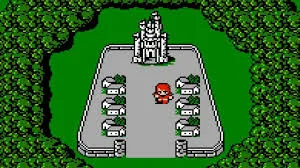
Although it is the first installment in the iconic Final Fantasy series, this game epitomizes the early JRPG experience in the most frustrating ways. Players are forced into tedious grinding sessions and frequent random encounters, which drag down the overall experience. Unlike the later Final Fantasy games that introduced helpful features such as auto-saves, the job system, and Phoenix Downs, the original lacked these conveniences. Notably, Phoenix Downs were missing entirely — only two classes could revive fallen party members, and neither could do so during a battle.
The challenge of Final Fantasy isn’t rooted in punishing difficulty, but rather in monotonous mechanics. Its inventory system is sparse, and many of its core elements are bug-ridden — for instance, the Intelligence stat serves no purpose. The game’s puzzles are cryptic, its dungeons labyrinthine, and random encounters make exploration a constant chore. Players can easily lose hours of progress over a single mistake.



 Security verified