
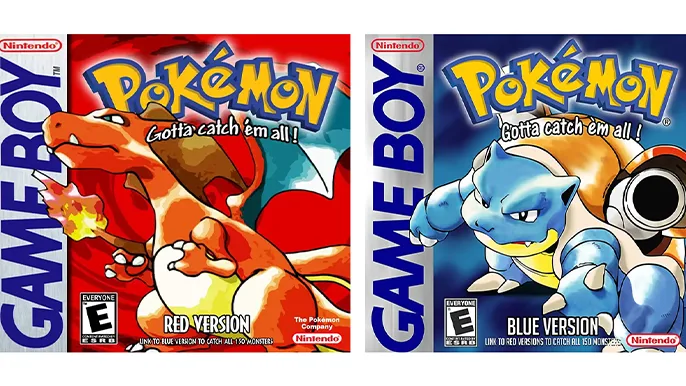
The monumental success of the Pokémon franchise can be directly traced back to the humble beginnings of Pokémon Red and Blue, the pioneering titles that first invited us into this captivating world. Even nearly three decades later, the core mechanics and design philosophies introduced in these games remain foundational to the series. One such enduring element is the strategy of releasing paired versions of each mainline Pokémon game – often with a complementary third version later on – each offering unique advantages and subtle differences to encourage exploration and interaction.
While some of these differences might be minor cosmetic alterations, the most significant divergence between these paired titles lies in the specific Pokémon that are available within each. Across the 151 Pokémon that comprised the inaugural generation, Pokémon Red and Blue each boasted a set of exclusive creatures – eleven in each version – leading to distinct gameplay experiences and fostering the need for trading to achieve a complete collection.
- Play Pokémon Red on your Android device with a simple APK.
- Play Pokémon Blue on your Android device with a simple APK.
Which Pokémon Were Exclusive to the World of Pokémon Red?

Pokémon Red and Blue masterfully ensured that each version stood alone as a complete and fulfilling game, rather than feeling like only half of the intended experience. This ingenious approach not only encouraged players to consider purchasing both complementary titles but also significantly boosted the appeal and utility of the Game Boy’s Link Cable. While the Link Cable existed prior to Pokémon’s arrival, it was the desire to trade for version-exclusive Pokémon (and to battle friends) in Red and Blue that truly transformed this peripheral into an essential accessory for countless players.
As the very first entries in the franchise, the concept of game-exclusive Pokémon in Red and Blue was thoughtfully implemented without being overly drastic. Players weren’t faced with entirely different starter Pokémon depending on their chosen version. Instead, each game featured a carefully curated set of eleven exclusive Pokémon. While none of these were necessarily game-breakingly powerful on their own, they were essential acquisitions for any trainer aiming to achieve the coveted complete Pokédex.
The eleven Pokémon exclusively found within Pokémon Red are: Ekans, Arbok, Oddish, Gloom, Vileplume, Mankey, Primeape, Growlithe, Arcanine, Scyther, and Electabuzz. While this list comprises eleven distinct Pokémon, the actual number of unique evolutionary lines is somewhat smaller, as several of these are simply the evolved forms of others. Many of these Red-exclusive Pokémon are commonly encountered in the wild, such as Ekans, Oddish, and Mankey, making them integral parts of the Kanto ecosystem within that version.
Looking closer at this selection, there’s a noticeable emphasis on Poison, Fighting, and Fire-type Pokémon. However, the Red exclusives also showcase the broader diversity of Generation I, including Grass, Bug, and Electric representation. While any Pokémon, with dedicated training and strategic battling, can become a valuable member of a trainer’s team, it’s generally accepted that among Red’s exclusives, Pokémon like Electabuzz, the swift Scyther, the powerful Arcanine, and the elegant Vileplume were more likely to find permanent spots on a player’s core battle team, with the others often serving the crucial purpose of Pokédex completion.
Exploring the Exclusives of Pokémon Blue

Pokémon Blue, while serving as the counterpart to Pokémon Red, offered its own distinct flavor without straying too far from the overall experience. Interestingly, in Japan, Pokémon Green was initially Red’s paired version, with Pokémon Blue being released later as a more refined and bug-fixed iteration of Green. However, for the North American and European releases, this was altered, making Pokémon Blue the official companion to Red. Notably, the 2004 Game Boy Advance remakes, FireRed and LeafGreen, reverted to Japan’s original pairing.
Just like Pokémon Red, Pokémon Blue also featured eleven exclusive Pokémon that could not be caught in its counterpart. It would have been a simple decision to give one version a numerical advantage in terms of exclusive Pokémon, but the developers wisely opted for parity, ensuring that both Red and Blue offered a similar scope of unique creatures to collect. The eleven Pokémon exclusive to Pokémon Blue are: Sandshrew, Sandslash, Bellsprout, Weepinbell, Victreebel, Meowth, Persian, Vulpix, Ninetales, Magmar, and Pinsir.
This selection of Blue-exclusive Pokémon shares some interesting parallels with Red’s offerings. For instance, the Bellsprout evolutionary line (Bellsprout, Weepinbell, Victreebel) mirrors Red’s Oddish line in being Grass and Poison-type Pokémon. Similarly, Vulpix and its evolution Ninetales, both Fire-types requiring a Fire Stone to evolve, serve as a counterpart to Red’s Growlithe and Arcanine. Furthermore, Blue’s aggressive Bug-type Pinsir is often seen as a direct counterpart to Red’s equally formidable Bug-type, Scyther.
However, Pokémon Blue’s exclusives also leaned more heavily into Ground and Normal-type representation compared to Red. Across both games, the exclusive Pokémon collectively spanned six different Pokémon types, ensuring a decent distribution. Ultimately, the perceived value and desirability of these exclusive Pokémon often came down to individual player preference, although the prominent role of Meowth in the Pokémon anime did make it a particularly popular and sought-after encounter for many Blue players.
Beyond Pokémon: Other Version-Exclusive Features

The distinct rosters of Pokémon weren’t the only differences setting Pokémon Red and Blue apart. The Celadon City Game Corner, a memorable location in both games, offered another layer of version exclusivity. Here, players could try their luck at the slot machines, hoping to win special Pokémon that were sometimes unobtainable elsewhere in the game, such as the elusive Porygon. However, the cost in Game Corner coins for these Pokémon prizes varied significantly between Red and Blue.
For example, the fairy-like Clefairy cost only 500 coins in Pokémon Red but a steeper 750 coins in Pokémon Blue. Conversely, the rare Dratini was priced at 2800 coins in Red but a much higher 4600 coins in Blue. Even the cost of Abra differed, costing 120 coins in Blue compared to 180 in Red. Interestingly, Pokémon Red’s exclusive Scyther was a hefty 5500 coins, while Blue’s counterpart, Pinsir, was considerably cheaper at 2500 coins. Perhaps the most significant discrepancy was the cost of Porygon, which required a massive 9999 coins in Pokémon Red but a more manageable 6500 coins in Pokémon Blue.
One mitigating factor was that the Pokémon won at the Game Corner were often at different starting levels, with the more expensive ones generally being at a higher level. This was beneficial for players looking to immediately use these Pokémon in battle but less so for those solely focused on completing their Pokédex.
Beyond gameplay elements, there were also minor presentational differences between Pokémon Red and Blue. The introductory sequence in Pokémon Red featured a battle between Gengar and Nidorino, while Pokémon Blue showcased Gengar battling Jigglypuff. Additionally, the selection of Pokémon displayed next to the trainer on the game’s start screen differed between the two versions.
Even the suggested player names reflected the version. Pokémon Red suggested Red, Ash, and Jack, while Pokémon Blue recommended Blue, Gary, or John. Intriguingly, these suggested names were often reversed for each game’s respective rival, leading some to speculate that Pokémon Blue subtly cast the player as Gary Oak, a compelling interpretation for some fans.
Red vs. Blue: Which Version Reigns Supreme?

Pokémon Red and Blue were meticulously designed to be well-balanced, and there isn’t a definitive “better” version. However, Pokémon Blue is often considered to offer a slightly easier gameplay experience. This perception stems from the fact that the base stats of many of Pokémon Blue’s exclusive creatures were generally higher than those of Red’s exclusives. Furthermore, some of Blue’s exclusive Pokémon were often regarded as competitively superior to their Red counterparts, although this wasn’t universally true.
For instance, Sandshrew and Sandslash were often seen as more robust than Ekans and Arbok. The Bellsprout line was generally considered stronger than the Oddish line. Meowth and Persian were also typically favored over Mankey and Primeape, and despite Scyther’s dual typing, Pinsir was often considered a more powerful Bug-type. However, Pokémon Red still held its advantages. Growlithe and Arcanine were generally stronger than Vulpix and Ninetales, and Electabuzz was undoubtedly a more potent Electric-type than Magmar. These version-exclusive Pokémon also subtly influenced the difficulty of Gym battles, as the opposing trainers’ teams would reflect the available Pokémon in their respective versions.
The Yellow Alternative: Blending the Best of Both Worlds?

While Red and Blue offered distinct but complementary experiences, the arrival of Pokémon Yellow, the third Generation I title, further complicated the equation. Pokémon Yellow introduced several changes and updates, largely aimed at mirroring the events and characters of the immensely popular Pokémon anime. This made perfect sense, as the anime had inspired countless fans to explore the games, and many were eager to see familiar faces like Ash, Pikachu, and other prominent characters.
Pokémon Yellow featured a unique selection of obtainable Pokémon, drawing from both Red and Blue rather than strictly adhering to one or the other. Interestingly, Pokémon Yellow made certain Pokémon unobtainable that were exclusive to Red or Blue. For example, Weedle, Kakuna, Beedrill, Ekans, Arbok, Raichu, Meowth, Persian, Koffing, Weezing, Jynx, Electabuzz, Magmar, and Mew were not directly obtainable in Yellow. This exclusion is curious, as it includes several Pokémon closely associated with Team Rocket in the anime, such as Ekans, Arbok, Koffing, Weezing, Meowth, and Persian. This unique distribution further incentivized trading with players of both Red and Blue to complete the Pokédex in Yellow.
The most significant change in Pokémon Yellow was that players began their journey with Pikachu as their starter Pokémon, mirroring Ash’s iconic partner. This Pikachu could not evolve into Raichu, had its own unique cry, and even featured a rudimentary friendship system, allowing players to gauge its mood. Interestingly, the starter Pokémon from Red and Blue – Bulbasaur, Squirtle, and Charmander – could all be obtained within Yellow through various in-game side quests, potentially leading to a very powerful and diverse party. Other differences in Yellow were largely cosmetic or perfunctory, such as updated graphics and designs for Pokémon, trainers, and the overworld, slightly altered Pokédex entries and move sets, and increased Team Rocket representation to align more closely with the anime’s narrative. The inclusion of the Pikachu’s Beach mini-game on Sea Route 19, while not essential, added another unique element to Yellow. While some consider Pokémon Yellow to be the definitive Generation I experience due to its blend of features, the subtle yet significant differences between Red, Blue, and Yellow are a testament to why each of these releases garnered massive fanbases, with no single version definitively outshining the others.
Conclusion: The Enduring Impact of Red & Blue’s Exclusives
In the grand tapestry of the Pokémon universe, the subtle yet significant differences between Pokémon Red and Blue, particularly their exclusive Pokémon, played a crucial role in shaping the early community and the “gotta catch ’em all” spirit. These version-specific creatures weren’t just about completing the Pokédex; they fostered interaction, trade, and a deeper engagement with the game’s world. The strategic considerations of which version to choose, the thrill of trading to obtain those elusive exclusives, and the subtle gameplay variations all contributed to the enduring legacy of these foundational titles. Even the later arrival of Pokémon Yellow, which offered a unique blend of elements, further highlighted the distinct identities and appeals of Red and Blue. Ultimately, the concept of version exclusives, first expertly implemented in these games, remains a cornerstone of the Pokémon series, encouraging players to connect and experience the Pokémon world in a more collaborative way.
- Play Pokémon Red on your Android device with a simple APK.
- Play Pokémon Blue on your Android device with a simple APK.
RELATED ARTICLE :
Ultimate Guide to Cloning Items in Pokémon Red, Blue, and Yellow




 Security verified