
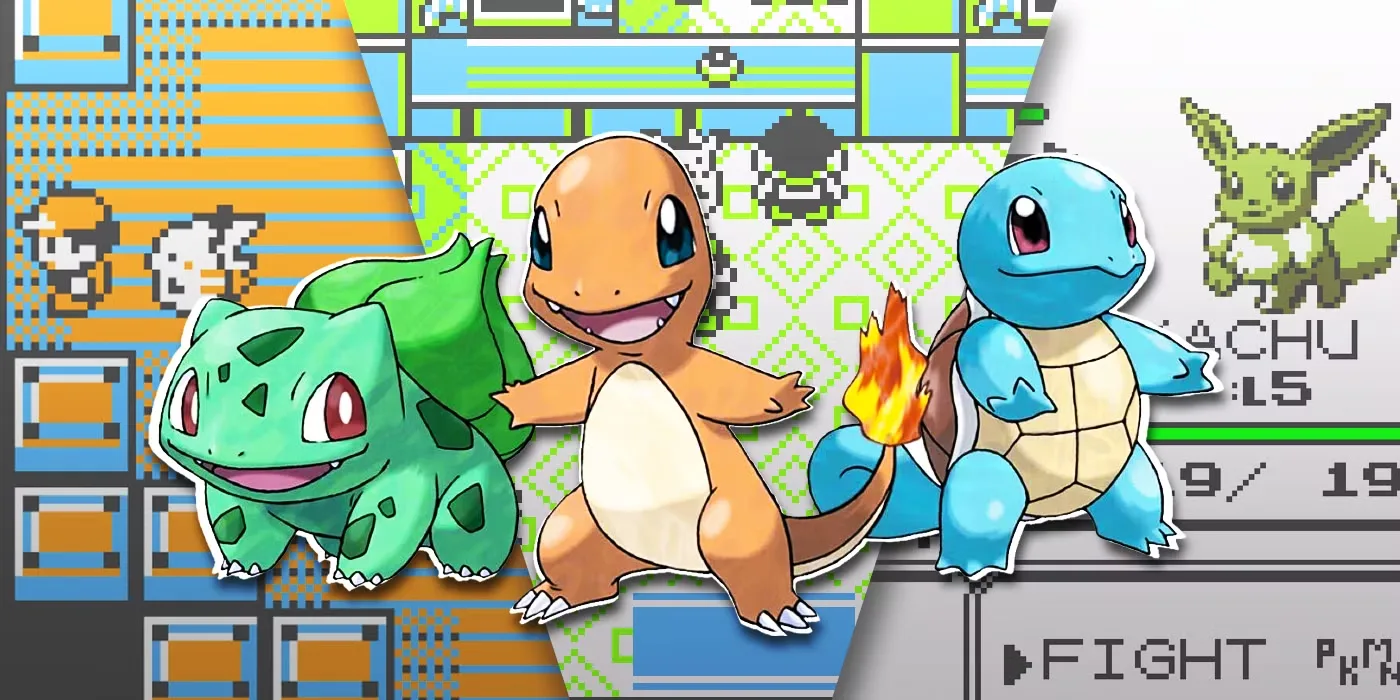
For over a quarter-century, the Pokémon Yellow franchise has meticulously built its empire, ascending to become the highest-grossing multimedia juggernaut. From its captivating anime and manga to its blockbuster feature films, Trading Card Games, and innovative genre-bending spin-offs, Pokémon consistently dominates every medium it ventures into. However, the foundational impact of its mainline video game series remains unparalleled. Now nine generations deep, many long-time fans still regard the original Pokémon Red and Blue games as among the franchise’s finest achievements. It was within these very first titles that many of Pokémon‘s enduring traditions were firmly established, notably the iconic concept of a trio of Starter Pokémon from which the player must make their inaugural choice.
The Generation I Starter Pokémon – Bulbasaur, Charmander, and Squirtle – are legendary creatures in their own right, setting a powerful precedent for future generations of adorable yet formidable introductory Pokémon. Another significant tradition that gained momentum in the Pokémon franchise is the release of a third, enhanced title for each generation, typically following the original pair of games. In the case of Generation I, Pokémon Yellow: Special Pikachu Edition brilliantly expanded upon Pokémon Red and Blue in incredibly satisfying ways. Among its most celebrated innovations was the unprecedented ability for players to acquire all three iconic Generation I Starter Pokémon, rather than being limited to just one.
Update Note: Pokémon Red and Blue delivered an amazing experience on the Game Boy, but Yellow masterfully capitalized on the burgeoning hype of the anime series during its release. This strategic alignment with the show led to subtle yet impactful changes within the game, transforming Yellow into a cherished nostalgic masterpiece for many fans.
Why All Starters Are Available: Yellow’s Anime Inspiration

Most “third versions” in the Pokémon franchise typically leave the player’s initial Starter Pokémon choice untouched, focusing on other refinements. What makes Pokémon Yellow truly unique is its deliberate design to mirror the hugely popular Pokémon anime series. While the Pokémon anime and video games share a foundational universe and many similarities, they were never designed to be direct adaptations of each other’s storylines.
However, the Pokémon anime’s success was in full swing when Pokémon Yellow was released (September 12, 1998, in Japan; October 19, 1999, in North America). This opportune timing allowed the new game the luxury of directly mimicking its anime counterpart, a clever strategy to better attract anime fans who might not yet have experienced the video games. Pokémon Yellow uniquely starts players off with a Pikachu as their mandatory companion, precisely reflecting how Ash Ketchum’s adventures begin with the iconic Electric-type Pokémon. The developers could have simply added Pikachu as an optional fourth starter, but this would have deprived players of the chance to organically acquire some of the anime’s most beloved creatures.
In the anime, Pikachu quickly becomes Ash’s first and most enduring Pokémon. Subsequently, the intrepid trainer gradually encounters and catches Bulbasaur, Charmander, and Squirtle in some of his earliest and most memorable adventures. To meticulously reflect these anime events, Pokémon Yellow adopts the same structure, making each of these traditional Starter Pokémon available for acquisition throughout the game. This unique offering also contributed significantly to Yellow‘s popularity as one of the most sought-after Generation I titles, as it’s the only entry where players can obtain Bulbasaur, Charmander, and Squirtle without the crucial assistance of trading with other players. While this runs the risk of making Yellow seem easier than its predecessors, the game attempts to compensate for this by slightly increasing the level of Gym Leaders’ Pokémon to maintain a challenge.
Pikachu’s Notable Moves in Yellow:
- Growl (Normal)
- Thundershock (Electric)
- Tail Whip (Normal)
- Thunderwave (Electric)
- Thunderbolt (Electric)
Obtaining Bulbasaur: A Test of Friendship in Cerulean City

Bulbasaur, the beloved Grass/Poison-type Starter Pokémon, can be obtained in Cerulean City, one of the first major destinations players visit in Pokémon Red, Blue, and Yellow. Cerulean City is home to the Kanto region’s second Gym, led by the Water-type specialist Misty. However, in Pokémon Yellow, it also serves as the location where players can acquire the charming Bulbasaur.
Players will be gifted a Bulbasaur if they interact with a specific female character located within a building who claims to be a caretaker for injured and abandoned Pokémon. One of the new mechanics subtly implemented in Yellow is a rudimentary Friendship System that specifically tracks the player’s bond with their companion Pikachu and influences its temperament. If the player’s Pikachu has a sufficiently high friendship level, this kind-hearted caretaker will deem them a worthy enough Pokémon Trainer to entrust them with her Bulbasaur. This acquisition method is particularly rewarding as it helps the player understand and engage with Yellow‘s new Friendship System, making it a more meaningful acquisition than a simple gift after a battle.
Bulbasaur’s Notable Moves in Yellow:
- Leech Seed (Grass)
- Poison Powder (Poison)
- Razor Leaf (Grass)
- Growth (Normal)
- SolarBeam (Grass)
These specific conditions for obtaining Bulbasaur are also a deliberate nod to the Pokémon anime and are reminiscent of how Ash gains his own Bulbasaur in Pokémon Episode 10, “Bulbasaur and the Hidden Village.” Interestingly, the 2018 Nintendo Switch remakes, Pokémon: Let’s Go, Pikachu! and Pokémon: Let’s Go, Eevee!, feature Bulbasaur and the other Generation I Starter Pokémon in the same general locations, but with slightly altered conditions. In these remakes, the player will still receive a Bulbasaur from the same character, but only if they have caught a total of 30 Pokémon (this counts total Pokémon caught, not unique species, so mass-catching common Pokémon like Pidgey or Rattata is an easy way to meet the requirement). Wild Bulbasaurs can also be rarely encountered in Viridian Forest.
Acquiring Charmander: A Foundling on Route 24
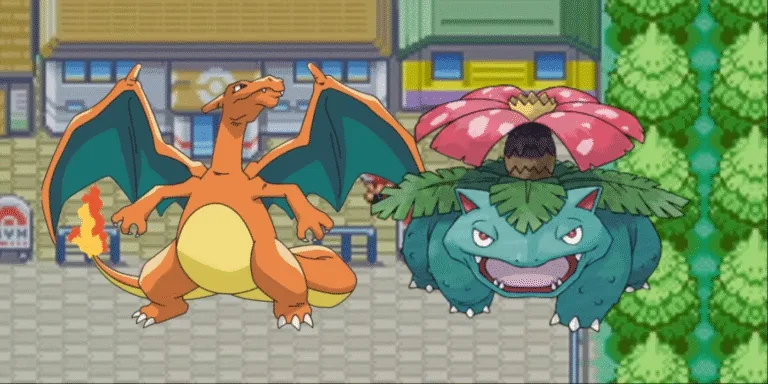
Charmander is undoubtedly among Pokémon‘s most distinct and iconic Fire-type species, from any generation, and the immense popularity of its final evolutionary form, Charizard, has only amplified its desirability. Pokémon Yellow makes Charmander available to players on Route 24, located just beyond the famous Nugget Bridge landmark. Here, a lone Pokémon Trainer patrols the area and will generously offer their Charmander to the player if approached.
Unlike Bulbasaur’s acquisition, which involves specific friendship conditions, obtaining Charmander is a much more straightforward exchange. There are no particular conditions to fulfill here other than simply talking to the correct Pokémon Trainer. The Charmander’s Trainer reveals they were on the verge of releasing the Pokémon back into the wild before the player happened upon them and took it off their hands. The circumstances behind this exchange, while not identical, still closely resemble how Ash acquires his Charmander in Pokémon Episode 11, “Charmander – The Stray Pokémon,” though thankfully without the same melancholic undertones present in the anime series.
Charmander’s Notable Moves in Yellow:
- Scratch (Normal)
- Ember (Fire)
- Leer (Normal)
- Flamethrower (Fire)
- Fire Spin (Fire)
Pokémon Yellow‘s remakes, Pokémon: Let’s Go, Pikachu! and Pokémon: Let’s Go, Eevee!, also ensure Charmander’s obtainability. In these games, the same Route 24 Trainer will offer their Charmander if the player has caught 50 Pokémon at that point in their adventure, making its acquisition slightly more challenging than in the original Yellow. Wild Charmander can also be rarely encountered in several locations: Kanto’s Route 3, Route 4, and Rock Tunnel. Being gifted the Charmander is generally the easier method, though lucky trainers might stumble upon a rare wild encounter.
Securing Squirtle: Officer Jenny’s Troublemaker in Vermilion City

Squirtle, the adorable Water-type Kanto region Starter Pokémon who evolves into Wartortle and Blastoise, is considered one of the most valuable initial selections in Pokémon Red and Blue due to its type advantage against Pewter City Gym’s Rock-type Pokémon. Just like Charmander and Bulbasaur, Squirtle is given to the player by one of the Kanto region’s concerned residents. In this instance, it’s Officer Jenny from Vermilion City, the third major city visited in Pokémon Yellow.
Officer Jenny rewards the player with a Squirtle after they have successfully earned the Thunder Badge from Lt. Surge, Vermilion City’s formidable Gym Leader. This requirement isn’t particularly taxing, as the Thunder Badge’s acquisition is a necessary step to progress through the game’s main storyline. The Vermilion City Officer Jenny is eager to pass off this Squirtle, claiming it’s a habitual troublemaker. These circumstances are deliberately designed to draw parallels with the Squirtle Ash catches in Pokémon Episode 12, “Here Comes the Squirtle Squad,” which famously features a mischievous gang of Squirtle.
Squirtle’s Notable Moves in Yellow:
- Tackle (Normal)
- Bubble (Water)
- Water Gun (Water)
- Skull Bash (Normal)
- Hydro Pump (Water)
Squirtle, like the other two members of Pokémon Red and Blue‘s Starter Pokémon trio, can also be obtained in Let’s Go, Pikachu! and Let’s Go, Eevee!. Here, Squirtle is still given by Vermilion City’s Officer Jenny, but the gift is contingent on the player catching 60 Pokémon. This is the most demanding of the remake’s requirements for the starters, substantially more challenging than Pokémon Yellow‘s simple Thunder Badge prerequisite. Fortunately, this requirement only applies to the total number of caught Pokémon, rather than unique Pokédex entries, making mass-catching low-level Bug-type Pokémon an effective way to simplify the task. Additionally, wild Squirtles can be rarely encountered in areas such as Route 24, Route 25, and Seafoam Island.
Beyond Starters: Other Notable Changes in Pokémon Yellow

While the ability to acquire all three Starter Pokémon is undoubtedly one of the most exciting and rewarding changes in Pokémon Yellow compared to Red and Blue, it is by no means the only difference. Yellow‘s concerted effort to more closely resemble the Pokémon anime results in several other significant alterations:
- Anime Character Inclusion: Several characters who originated in the anime, such as Team Rocket’s memorable duo Jessie and James, as well as the ubiquitous Nurse Joy and Officer Jenny, are now prominently featured within the game.
- Revised Sprites: The in-game sprites for Gym Leaders Brock and Misty are revised to more closely resemble their iconic anime counterparts.
- Pikachu’s Unique Behavior: The player’s companion Pikachu’s cry is famously changed to its iconic “Pika!” yell from the anime. Furthermore, this special Pikachu is incapable of evolving, reflecting Ash’s definitive decision to not evolve his Pikachu into a Raichu. Team Rocket’s leader, Giovanni, also notably uses a Persian, just like his anime counterpart.
- Gym Leader Teams: The game’s Gym Leaders have different Pokémon teams designed to better resemble those seen in the anime, further solidifying Yellow as the perfect companion game for the television show.
- Unavailable Pokémon: Pokémon Yellow uniquely has 13 distinct species that cannot be obtained within the game itself. This mix includes some of the unobtainable creatures from Red and Blue, alongside specific Team Rocket-centric Pokémon such as Ekans, Arbok, Meowth, Persian, Koffing, and Weezing, adding a layer of version exclusivity unique to Yellow.
- Cosmetic & Gameplay Tweaks: Beyond these anime-related gameplay changes, Pokémon Yellow also features redone Pokémon Trainer sprites, altered Pokémon movesets, and subtle alterations to the Celadon Game Corner elements. The unique Friendship System with Pikachu and the engaging Surfing Pikachu minigame are also welcome additions that expertly capitalize on Pikachu’s soaring popularity.
- Following Pokémon: Yellow is also the first game in the series to feature a Pokémon following behind the player in the overworld. While this specific mechanic is limited to Pikachu in Yellow, it’s a beloved feature that adds a layer of immersion and cuteness, a concept that would later be reprised and expanded upon in future generations.
- Rival’s Eevee Evolution: The rival character in Yellow has an Eevee whose evolution is uniquely determined by how the player battles them, adding a nuanced layer of consequence to early-game encounters.
These highlights demonstrate Pokémon Yellow’s nuanced differences, illustrating why it’s far more unique than the standard “third title” in a Pokémon Generation. The opportunity to acquire all three Generation I Starter Pokémon is just one of its many perks. It is also apparent that Yellow is often the game fans hold the most nostalgia for, precisely because it made small, meaningful tweaks to an already great game and successfully reminded players of the iconic anime.
Conclusion: Yellow’s Enduring Charm and Anime Legacy
Pokémon Yellow: Special Pikachu Edition stands as a unique and cherished entry in the venerable Pokémon franchise. By strategically aligning its narrative and gameplay mechanics with the burgeoning popularity of the Pokémon anime, it offered players an experience that was both familiar and refreshingly new. The ability to collect all three iconic Kanto Starter Pokémon – Bulbasaur, Charmander, and Squirtle – without the need for trading was a game-changer for many, enhancing the sense of accomplishment and offering unprecedented team-building opportunities within a single cartridge.
Beyond this highly sought-after feature, Yellow‘s myriad subtle changes, from character sprites and Gym Leader teams to its innovative Pikachu companionship features, created a distinctly immersive and nostalgic journey. It proved that a “third version” could be more than just an updated re-release; it could be a heartfelt homage to a beloved companion medium. For many, Pokémon Yellow isn’t just another game; it’s the definitive Gen I experience, a vibrant bridge between the nascent video game world and the animated adventures that captured a generation’s imagination.
RELATED ARTICLE :


 Security verified