
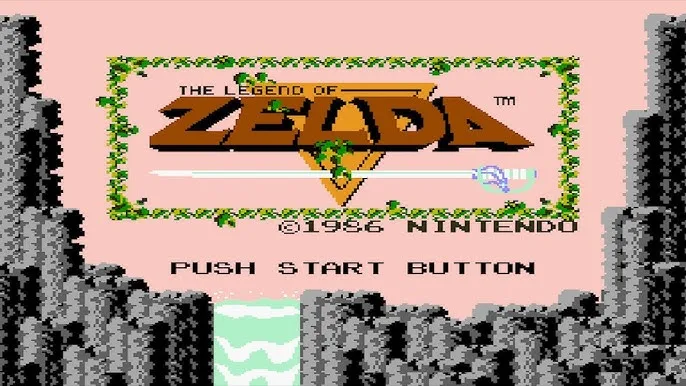

Welcome back to another edition of Retro Corner Reviews! It’s that exciting time of year again—E3 is upon us! As you might have heard, Nintendo has decided not to showcase their upcoming console, codenamed NX, at this year’s event. Instead, they will shine the spotlight on their current lineup for the Wii U. One of the highlights is the latest entry in the beloved The Legend of Zelda franchise, which will have hands-on demos available for attendees.
In light of this, we’ll take a look back at the very first game in the Zelda series, a title that has left a lasting mark on gaming history. While it may appear somewhat archaic by today’s standards, this pioneering game has influenced countless titles, inspiring developers to draw from its mechanics and themes. When it debuted on the NES, it introduced players to an expansive world that was unprecedented at the time.
Though the graphics might not hold up against later NES classics like Super Mario Bros. 3, the gameplay was groundbreaking, setting significant standards in the RPG and adventure genres with its intricate puzzles and vast exploration opportunities. The story follows Link, a brave warrior embarking on a quest in the kingdom of Hyrule to gather eight pieces of the Triforce of Courage. Throughout his journey, he confronts Ganon and his minions, who have taken over the kingdom, all in an effort to rescue Princess Zelda.
This classic narrative—of heroism, kingdom-saving, and the quest to rescue a damsel in distress—was a hallmark of Nintendo’s storytelling, common in many games from the 1980s. The question remains: will the passage of time diminish the appeal of this iconic title due to its now-dated concepts?
Jouez à The Legend of Zelda 1 pour Android APK
Jouez à The Legend of Zelda 2 pour Android APK
1. The Legend of Zelda Gameplay

The original Legend of Zelda is widely regarded as one of the best adventure games on the NES, thanks to its unique gameplay features. Presented in a traditional 2D overhead style, players encounter many of the lore monsters and tropes that have come to define the series. Similar to the first Super Mario Bros., the game features a diverse cast of characters and enemies, each found in distinctive locations that enrich the gameplay experience.
Players will face iconic foes such as Lynels, Octorocks, and Moblins in the overworld, while the dungeons are inhabited by undead creatures like Gibdos, Ghinis, and Stalfos. While these enemy types may not be groundbreaking—having roots in Dungeons & Dragons and Ultima—they still contribute to the game’s charm.
Throughout the adventure, players meet NPCs in caves and hidden rooms within dungeons that offer hints, although this hint system can feel archaic and vague, reminiscent of Castlevania II. After experiencing the advancements in fourth-generation adventure games like Zelda: A Link to the Past, it’s clear how much the original system has aged.
Additionally, the hidden caves and secret areas often feel overly concealed. I found myself wasting many bombs in search of hidden walls, which could have been made clearer with subtle visual cues like cracks or discolored tiles. However, the gameplay rewards exploration; discovering these secret spots can yield valuable items or weapons that enhance Link’s abilities.


In the first image, Link is depicted using a candle to ignite a bush that conceals a full heart piece. This highlights a characteristic of NES games: secrets were often cryptically hidden, with no clear indicators to differentiate between passable walls and regular props. By the time 16-bit successors emerged in the 90s, many of these outdated design elements were revised.
The next image showcases a boss battle against a Manhandle in the third dungeon. There’s a clever trick that allows players to defeat this boss in one shot with well-timed bomb placement. The Manhandle stands out among guardian monsters; its unique four-headed plant design is a refreshing deviation from the standard fantasy creature tropes. Sadly, this intriguing creature would later make appearances in Zelda Classic quests and Hyrule Warriors on the Wii U and Nintendo Switch.
However, the game has its share of flaws that have not aged well, leading to some frustrating moments. As the inaugural entry in the series, the weapon mechanics are somewhat limited, particularly regarding secondary tools. Interestingly, some items have unexpected uses, such as Meat, which can distract nearby enemies. I only discovered this feature after watching a gameplay video featuring a Zelda Classic quest.
Another aspect that requires improvement is the map system displayed in the top-left corner of the screen. Throughout the game, it remains blank, showing only a dot for Link’s position. This raises the question: why include a map if it offers no valuable navigational information? The lack of detail makes exploring Hyrule tedious, especially since a map for the overworld is absent despite having one for the dungeons.
The flute is another noteworthy item; it can weaken a Digdogger or serve as a teleportation device. While it makes sense for it to be useful against a boss, that is its only significant application. Additionally, player movement is restricted to a four-way grid, resulting in stiff controls, particularly when stabbing with the sword. The NES D-Pad could easily accommodate more input options, and a more fluid control scheme—like slashing at an angle—would have improved the experience. Even other games, like Willow, employed such mechanics, allowing for a wider attack range against enemies. The limitation of stabbing directly forward makes it slow and challenging, especially when dealing with fast-moving foes like blue Dark Nuts.


The original Legend of Zelda featured level designs that challenged players to solve puzzles within each room. This approach often provided multiple pathways to progress, even when the most straightforward route was visible. For instance, the left image illustrates Link using a bomb to break through a wall in the fifth dungeon, revealing a special item. By this stage, players likely began to recognize that certain walls, like the one depicted, could be destroyed with bombs.
While this design choice added an intriguing layer of exploration, many developers have since moved away from it, recognizing that it can lead to frustration for both casual and dedicated gamers. The right image shows Link using the Flute to teleport back to the fourth dungeon. However, the Flute’s teleportation mechanic is notably awkward, as it randomly sends Link back to previously visited levels. In The Legend of Zelda: A Link to the Past, Nintendo refined this concept with the Ocarina, allowing for more intuitive navigation, though the original game’s mechanic remains cumbersome.

The Magic Boomerang, Bow, and Magic Rod are among Link’s most effective secondary weapons in the original game. The reliance on four-way grid controls made these weapons valuable for long-range attacks against enemies. Interestingly, many of these tools have not appeared in later games, except perhaps through reimagining. For example, the Meat, Magic Rod, and clocks have had limited returns, with only the clocks making a reappearance.
In The Legend of Zelda: A Link to the Past, the game introduces rods through the Canes of Byrna and Somaria, though their magical mechanics differ significantly from those in the original. The Magic Rod only returns in Link’s Awakening for the Game Boy and Game Boy Color versions, showcasing how some original concepts faded from the series.
Clocks, which freeze enemies and grant temporary invulnerability, were most useful in the original game’s second quest, where the difficulty ramps up. It’s clear why EAD (Nintendo’s Entertainment Analysis & Development) chose to abandon this concept in later titles; maintaining balance became crucial, especially as gameplay became more accessible. Although the idea could have enhanced a harder mode, the shift towards casual gaming in subsequent installments made its inclusion less viable.
However, the original design concepts still find life within the community, particularly in projects like Zelda Classic (ZC), which allows fans to continue exploring and developing those early ideas
Visuals/Presentation
![Detonado Completo 100%] The Legend of Zelda #1 - O COMEÇO DE TUDO! - serqueux76.fr](https://i.ytimg.com/vi/kvvFN6CLVFM/maxresdefault.webp)
When discussing the NES Zelda titles, the visuals are often overlooked in the context of why the original game is considered a classic. At the time, EAD was still utilizing visual assets reminiscent of the Black Box games, which contributes to the first Zelda appearing dated, akin to titles from 1985. The overworld lacks detailed floor textures, opting instead for solid color choices. While it does feature varied environments, such as forests and mountains, the Lost Woods stand out as a unique woodland area.
One notable aspect of the terrain is that each location has enough distinctive features to signal that it’s a new area, allowing players to recognize unexplored regions. However, those expecting intricate environments will find mostly dark blue and green hues dominating the visuals. My main criticism lies with the dungeons, which often replicate the design of the initial level with repetitive square rooms. The color schemes tend to be nearly identical every few rooms, and a bit more variation would have greatly improved the experience. Overall, the dungeon designs appear bland and uninspired.
Additionally, the overworld feels constricted in design, especially given its maze-like nature. This is a common issue with early NES games, where only Super Mario Bros seems to have stood the test of time. Although the original Zelda featured a solid art style and intriguing lore, the limitations of 8-bit hardware hindered its full potential. Other titles, like Final Fantasy and Metroid, serve as examples of great ideas that didn’t translate effectively in their initial forms. The advancement of 16-bit successors highlighted the shortcomings of their 8-bit predecessors, showcasing what could have been achieved with better technologythe impact of graphics and design in classic games


When comparing the original Zelda to earlier generations that relied on 8-bit hardware, it’s clear that distinguishing between objects and environments was often a challenge. This was particularly evident in the action-adventure genre, where many areas featured blocky room designs limited to a single color. The NES’s 8-bit capabilities marked a significant evolution, allowing for more diverse and visually engaging designs.
For example, in the first image showcasing Link in the Lost Woods, brown trees help differentiate this area from other forests on the overworld. Although this representation is a significant step back from the visuals seen in A Link to the Past, it effectively conveys the uniqueness of each location. Similarly, the entrance to the fourth dungeon in the second image highlights the original game’s lackluster designs; despite the presence of statues, they fail to communicate the historical context of these spaces. It wasn’t until the series transitioned to 3D that the environments truly began to shine.
Character animations also left much to be desired. Aside from Link and his enemies moving back and forth, the attack animations were quite limited. For instance, Link could only stab in four directions, which, while acceptable for 8-bit technology, felt restrictive. In Zelda Classic, developers managed to enhance animations, introducing effects like flowing water and more dynamic environmental elements using 8-bit assets. Some quests within that engine feature visual improvements not present in the original game, demonstrating the potential that EAD could have explored with similar advancements.
Games like Willow and Crystalis exemplify how to push the 8-bit capabilities beyond what Zelda II achieved. One notable strength of the NES is its audio quality. The music in The Legend of Zelda is regarded as one of Nintendo’s best compositions at the time, with upbeat overworld themes contrasting the darker tones found in dungeons. However, some players might find the tunes repetitive after prolonged exploration in later stages.
Features /Content of The Legend of Zelda

For an NES game, The Legend of Zelda provides substantial content and replay value, especially thanks to its unique “Second Quest” mode. Notably, this second quest isn’t just a harder mode but offers rearranged dungeons, remixed enemies, and hidden surprises that give the game a fresh layer of challenge. Unlike traditional “Hero Mode” options, this mode brings a completely new layout that many players found thrilling. Remarkably, players could access it right away without beating the game first by simply naming their file “Zelda.”
In addition to the Second Quest, the gold cartridge itself has become iconic. It not only marked the game as unique but has also been memorable for fans and collectors. In Zelda Classic, an unofficial modding platform, dedicated fans have expanded on this idea, creating further quests that maintain the spirit of the original second quest while adding their own twists and difficulty.
The Second Quest itself has some notably tricky elements, such as the infamous looping paths in dungeons or puzzles that leave players guessing which walls can be walked through. Other memorable aspects include the red and blue orbs that disable sword use in certain rooms, testing players’ skill with non-sword items. Another significant addition is its more accessible save system compared to other RPGs of the era, where players could save their progress without a cumbersome password or specific in-game save points.


The original Legend of Zelda is brimming with hidden, cryptic secrets, some of which are almost impossible to find without guidance. Many players recall finding these hidden spots by accident or through tips in Nintendo Power magazines. One of the most challenging aspects in the Second Quest is navigating areas with no visual clues, like screen B-16, which appears empty yet contains a hidden path only discoverable by random trial or repeated playthroughs.
Another iconic feature in the Second Quest are the red and blue orbs. The red orbs disable Link’s sword, while blue orbs counteract this effect, requiring players to strategize around room layouts where red orbs dominate while blue orbs are placed at a distance. This adds a significant layer of difficulty, especially when a room is filled with red orbs, making it necessary to plan carefully to avoid these effects and navigate the challenge successfully
Overall Assessment

The original Legend of Zelda has aged significantly, with many of its concepts feeling outdated in today’s gaming landscape. While it set a foundational standard for adventure and RPG genres on the NES, time has highlighted several shortcomings in its design. The level structure, though innovative for its era, often lacks modern refinements, making navigation and progression challenging by today’s standards. Visually, the game doesn’t quite match up to contemporaries like Metroid or Mega Man. The overworld and dungeon designs, though functional, lack distinct themes and detail, with only sparse statues and structures to add variety.
However, the Legend of Zelda soundtrack remains a nostalgic gem of 8-bit chiptune music. Despite a tendency for repetition, it established iconic melodies that are synonymous with classic NES sound. If your health runs low, the warning beep is memorable, though it can be grating. While the story may feel simplistic, with minimal character or environmental diversity, the instruction booklet provided valuable context. A Link to the Past would eventually refine the series’ world-building, introducing more immersive environments and lore.
The Legend of Zelda remains a milestone, and its lasting legacy can still be appreciated, especially with fan-made projects expanding on the original concept.
Ratings
Gameplay: 7.8/10
Graphics/Presentation: 7.0/10
Features/Content: 8.7/10
Overall Score: 8.0/10 – Very Good


 Security verified