
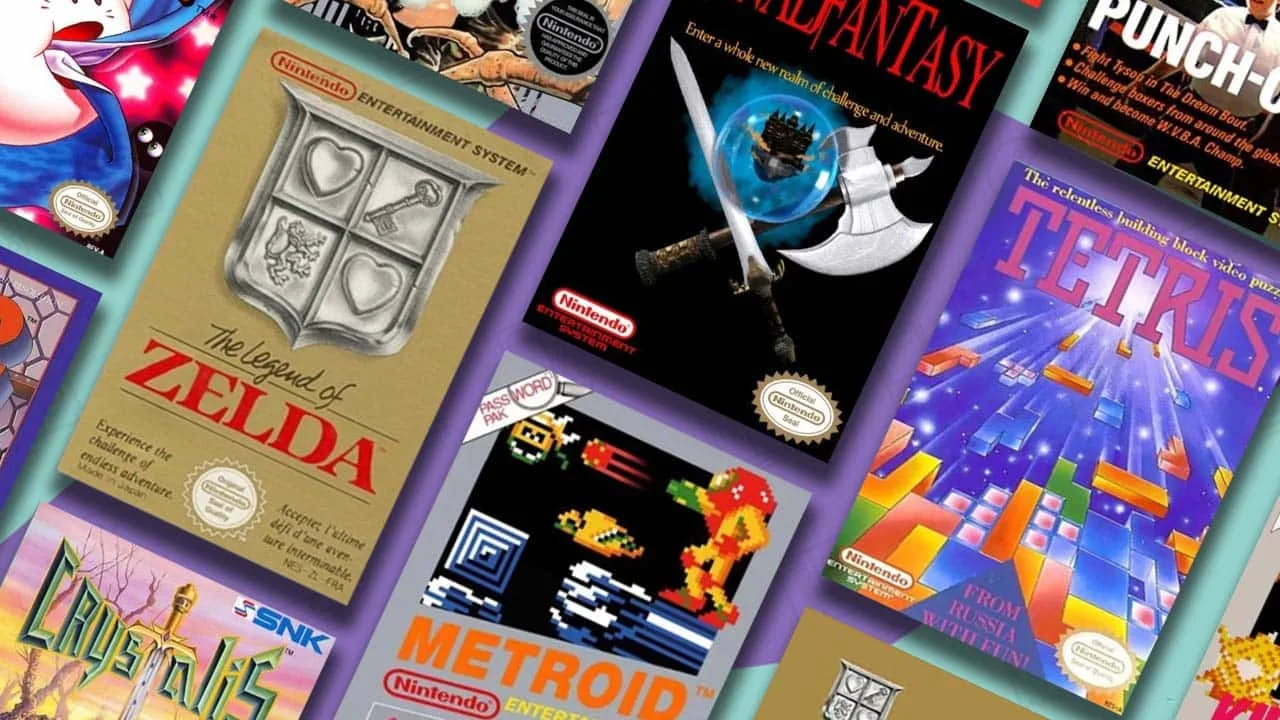

There are more than 700 games in the NES collection. That’s a lot, but it’s about in the middle of the pack in terms of successful consoles. Selecting any number of the top games is still challenging. This is most likely the reason why no one has the audacity to compile a list of the best X NES games. I don’t claim to be the world’s most courageous person, but I do claim to be shameless.
It should be noted that although I have played a really extensive selection of the NES collection, I have not done so all of them. I haven’t played Bases Loaded 3, for instance, but I’m willing to consider the notion that it’s the pinnacle of the NES catalog. Furthermore, this has nothing to do with the most well-liked or significant games. That’s a different subject. There are numerous other reasons why these are the greatest.
Additionally, much though I would love to, I’m not including Famicom exclusives. Just know that Metal Max would be dominating these games if I were. In addition to Kunio-Kun. Unfortunately, the top 18 NTSC NES games are listed here.
Table of Contents
1. The 1986 Castlevania

In my opinion, Castlevania is without a doubt the greatest NES game. It’s perfect in terms of both design and appearance. I still think it’s the finest in the series and on the console because of its finely tuned controls, flawless enemy placement and behavior, a challenging yet fair game, and a surprising amount of variation. I believe that says it all, especially because the Castlevania series already has enough amazing games to complete its own very subjective top 18
Additionally, don’t assume that this is a last-minute choice. I knew I had achieved the pinnacle of my NES library explorations when I eventually arrived in Castlevania. I’m even more sure now that I’ve done additional research.
2. 1990 Gun Nac

Although many of the excellent shoot-’em-ups on the NES were conversions of arcade games, many more never even made it to our front-loaders. One notable exception is GunNac, which is unquestionably the best game available on the system.
It’s a technical marvel with nearly flicker-free graphics and incredibly quick scrolling. In addition, there are a plethora of weapons and explosions to clear the screen, as well as an endless variety of foes. Considering its 8-bit trappings, Gun*Nac is incredibly resilient. You’re missing out if you haven’t heard of it or even tried it
3. The 1989 River City Ransom

Beat-’em-ups were a challenging genre to master due to the NES’s severe graphical memory restrictions. Some of the most popular ports of the Double Dragon and Teenage Mutant Ninja Turtles games were among the treasures we did receive, though. While those are acceptable, Technos’ peculiar experiment in the Kunio-Kun series is, in my opinion, the greatest.
River City Ransom is as much about shopping as it is about battling, with the ability to upgrade your character with food and equipment. When fists are raised, it turns into an absurd fight, utilizing its emotive artistic flair to the most. One of the rare games that I can think of that lets you use the second player as a weapon is this one.
4. Zelda: The Legend (1986)

The original Legend of Zelda is frequently cited as the game that first introduced me to video games. Even though I was quite small at the time, I was captivated by my father’s play through it. But Legend of Zelda isn’t one of the many foundational games from my early years that I hardly replay. I’ve made it a habit to go back and play it again virtually every year for some reason.
Although Zelda had a significant influence on the course of game development, influence is not the focus of this list, as I have said. Without that, The Legend of Zelda is an open-ended game that honors your skills as a naturally curious person.Perhaps a little too much, but I managed to determine which shrubs to fire, and I can’t stop thinking about it.
5. 1987’s Punch-Out!

I admire Punch-Out! because I think it’s a good concept that’s done really well. Although it is technically a port of a game that was first launched in arcades years ago, the fact that it was redesigned to be more than simply a quarter-munching monster makes it much more entertaining on the console. When you’re on a setup that doesn’t have terrible input lag, the timing and visual cues combine for an ideal challenge. Until you start competing against the best boxers, that is. When my attention span is put up against constantly getting my ass kicked, it never survives three rounds, which is why I still can’t defeat Mike Tyson.
6. 1988’s Mega Man 2

In North America, the first Mega Man game sold for almost the same price as a box of live wasps. Fortunately, Capcom reluctantly approved a sequel, and even more fortunately, they made another attempt here. has a less challenging level and less attractive box art. Even though Mega Man 2 is already one of the easier 8-bit games, it loses all of its challenge if you play it on “Normal” mode. I’m not only flexing when I assert that the Gods of Thumbs intended for the unsuitably named “difficult” to be used in this way. In actuality, the setup is the same as the Famicom version
Mega Man 2 has everything when you’re playing it at the right difficulty. Outstanding boss fights, a strong level design, and a fantastic soundtrack. Although many people claim Mega Man 3 is better than this title, I think that’s bupkiss. Mega Man 3 is excessively lengthy, and it seems like wallpaper paste to me. However, the intro music is fantastic.
7. Batman (1989)

The 1989 film Batman has virtually little to do with Batman: The Video Game. It’s more related to Castlevania and Ninja Gaiden, however you play as purple Batman and fight robots in sewers most of the time.
The problem with Batman is that, with a better design, it would resemble Ninja Gaiden. Wall jumping and gadget tossing are allowed, but it never goes to the lengths of spamming adversaries and altering the rules entirely to take advantage of you. I feel like I earned it, even if it’s one of the hardest games I’ve ever finished. It was a satisfying triumph to figure out how to timing those jumps in the clock tower, master every move on the utility belt, and somehow defeat the Joker.
8. Contra (1988)

Contra was a vicious quarter-muncher at arcades. Without using up the majority of your limit, it was hard to see even a little portion of it. Even while it’s still really nasty in its home 8-bit version, at least you paid for it up front. The NES’s Contra is a classic run-and-gun shooter that served as a home for the console series. It’s polished, diversified, easy to read, and fluid. On top of that, the soundtrack is really awesome.
Super C, which is good but not quite as good as Contra, would come after Contra. Contra 3: The Alien Wars and Contra: Hard Corps are two examples of the series’ console-exclusive releases that would result from this.
9. The 1986 film Dragon Warrior or Dragon Quest

Although you are welcome to use your preferred Dragon Warrior (or Dragon Quest) game, I still think the original feels the finest. Its open design and simplicity appeal to me. If this list reveals anything, it’s that I prefer focus and refinement over scale, even though Final Fantasy and the three Dragon Warrior series games that follow push the formula in intriguing ways.
I’m glad Dragon Warrior can be finished in around 10 hours, and I appreciate the surprises it gives you. Its straightforward nature makes it a perfect fit for consoles, and its bright aesthetic makes it somewhat more approachable than CRPGs at the time. Although I adore all of the Dragon Warrior games on the NES, if I had to choose just one, it would be the original.
10. 1988’s Super Mario Bros 3

I love Super Mario Bros. 3, but it doesn’t make my thighs grind, so this is likely to be a lot of people’s #1 choice. However, there are many things to adore about it. For starters, it plays like a device from a different console generation, executing quick movement and 4-way scrolling with ease. There are tons of extras and hidden mysteries, the level design is nearly unmatched, and the amount of variety available is astounding.
It remains one of the plumber’s greatest house calls even after several decades. The fact that Super Mario Bros.It is astonishing that Super Mario Bros. 3 and the original Super Mario Bros. share a console.
11. Dracula’s Curse, Castlevania 3 (1989)

The third Castlevania: Dracula’s Curse is not far from the first. Although I think there are certain places where it’s not nearly as tightly designed, some people would definitely rank this one higher than the original. One such area is difficulty, since the North American version of Akumajou Densetsu has adjustments that aren’t present in the Japanese version. Specifically, the player’s damage is less equitable and increases more linearly.However, Castlevania 3 retains much of the original’s amazing control and sense of style. It has more individuals to recruit and collaborate with, branching paths to the conclusion, and a greater range of difficulties and obstacles. Overall, it’s an excellent follow-up.
12. Metroid (1986)

I completely see why some people find the original Metroid unappealing. When you first start the game, the floaty controls, obnoxious monsters, and harsh life system may be incredibly harsh. And let’s not even talk about the enormous passwords you need to save your progress.
There is a lot to like below, too, provided you can get used to the massive friction Metroid throws up front. It’s a tough game with excellent advancement. It was also highly important, as the console was immediately affected by its gated exploration formula. Even if it can be challenging to enter today, it is still rewarding.
13. The 1993 Kirby’s Adventure

I frequently claim that while I don’t necessarily love the games, I like the concept of the Kirby. The exception to this rule is Kirby’s Adventure. It sort of shows that it was a late 1993 release. In addition to his technological cunning, Kirby was endowed with the capacity to absorb the abilities of his adversaries and absorb them. Although the game isn’t particularly challenging, it is amusing throughout.
14. 1988’s Super Mario Bros 2

Because the original Super Mario Bros. 2 is kind of butt, Nintendo changed it and renamed it as a Mario game for North America. Yume Kōjō: Dokidoki Panic was first released on the Famicom Disk System in 1987. It’s challenging, but in a very harsh and unjust manner.
Our copy of Super Mario Bros. 2 is a silly game about flinging guys into other guys. Although it doesn’t have many similarities with the original game, you probably wouldn’t guess if you weren’t aware of its Japanese release. It has a lively music and is a difficult platformer. In my view, it is far superior to Super Mario Bros. 2, which was released in Japan, and even better than the original game.
15. 1989’s Duck Tales

Even if there are some well-known licensed games these days, the majority of 8-bit games that were based on films or cartoons weren’t particularly excellent. A few of them were incredibly awful. Conversely, Capcom had a solid reputation for creating amazing video games using Disney licensing. Duck Tales was one of their earliest projects.
Since Duck Tales wasn’t just an action show, there were many possible approaches for a game based on the show. Capcom decided to perform hop-and-bop in a unique way. You take on the role of Scrooge McDuck, who is able to defeat foes by using his cane as a pogo stick. Finding treasure was the true treasure, even though the platforming was good.
16. 1993 Mega Man 6

It is likely that you anticipate seeing a minimum of one or two Mega Man games on this list. If there are several megamen on the list, you most likely anticipate seeing two distinct titles. I won’t give anything away, but I think Mega Man 6 is the second-best in the series. Although all six games are essentially basically the same game, each one has unique elements that either enhance or diminish the series.
The option to pair the blue bomber with his dog in a variety of series-exclusive transformations is something that Mega Man 6 introduces. In essence, it takes away from any challenge. The Rush transforms allow for branching courses in some of its fantastic levels. But it is toothless, too. Whether or not lessened difficulty concerns you is up to you, but I don’t find it to be that big of a deal.
17. The 1990 Maniac Mansion

Due to disparities in capability, NES ports of home computer games were frequently quite subpar. But when it comes to the NES version of Lucasarts’ iconic point-and-click adventure, Maniac Mansion, it seems like no compromises have been made.
The more freeform aspect of Maniac Mansion’s puzzles is what makes it such a distinctive and thrilling point-and-click game. Depending on how you combine the three characters you choose, your route to the finish line varies. This game has a very short time limit from beginning to end, yet it’s unlikely that you’ll finish it on your first try. You’ll play Maniac Mansion repeatedly, and strangely, for a point-and-click adventure, it still fun each time
18. 1985 Super Mario Bros

Super Mario Bros. would always be at the top of this list of the most impactful titles on the system, as I mentioned. It’s hard to overestimate the influence of the NES on console games, which is essentially a system based on Super Mario Bros.
It’s still a really entertaining game, too. Even while its age guarantees that the gameplay will always be rather simple with limited diversity in monsters and obstacles, its level design more than makes up for it. It pushes its mechanics in novel and intriguing ways from World 1 to World 8. While advancements in NES cartridge technology would allow its predecessors to push the envelope farther, the original’s workmanship alone makes it stand out.


 Security verified